
















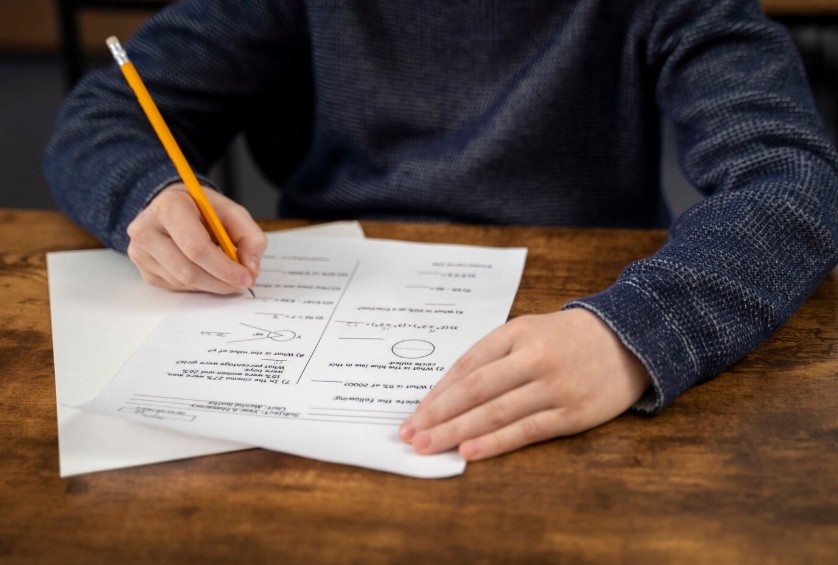










Finals week is a dreaded time for students around the nation. The classes represent a part of school that is heavily dramatized, with just one test accounting for a large share of students’ grades.
As a senior who has been through a few, I can say the tests can be daunting at first. But with a bit of perspective change, the stress can be manageable.
To start, the first question is why we retain information better over longer periods. The answer to this is the spacing effect, which is the encoding of information over repeated sessions.
“Spacing educational lessons apart in time promoted both simple and complex generalization. Moreover, the results indicated that the benefits of spacing lessons over time were evident one week after the last lesson,” says the National Library of Medicine’s study on children’s acquisition of science concepts.
Now this is all good, but finals are known to be quick and very cramming. So the problem isn’t complex retention; it is about staying collected while completing the test.
This next piece of advice comes from my playing tennis competitively. In each point, having a short memory is essential. What I mean is that worrying and second-guessing ourselves will only harm us, rather than help us.
Famous tennis player Rafael Nadal is quoted as saying, “What happened in Monte Carlo happened, and what happened in Madrid happened, and what happened in Barcelona happened. And here we are. We are in Rome.”
This means that whatever has happened, nothing should take our focus out of the present. What Nadal said can be applied to tests: whether preparing questions or worrying about how much time is remaining, it should not take away from the present moment, the here and now.
The final section revolves around the saying, “have a goldfish memory”. Of course, this does not mean forgetting information; it means not wasting time on thoughts that do not matter, such as a frustrating question. The best way to go is to work on a problem, evaluate it at the end, and then move on to the next. Simple as that.
Spacing out time while studying, staying in the present moment during tests, and “forgetting” problems to move on and continue the exam are the most effective ways to crush tests.