















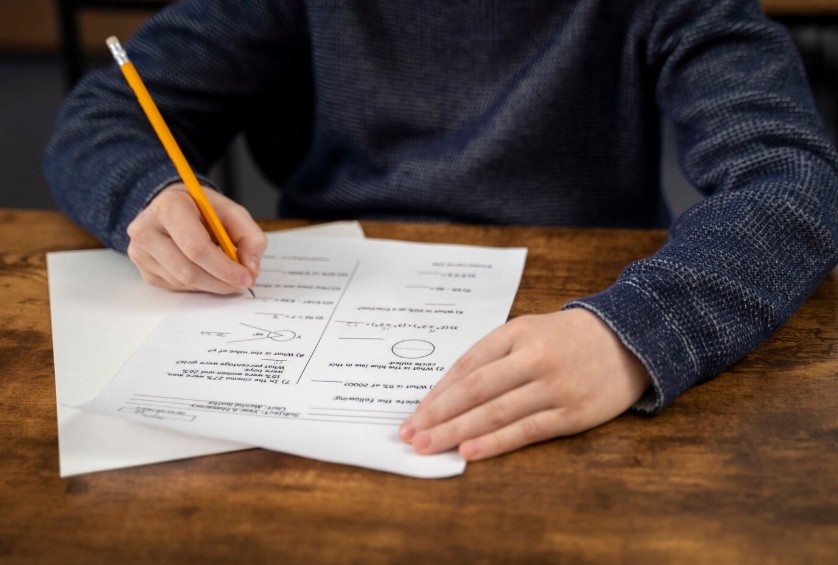










The Reading performance of seniors has reached a new low. According to Dana Goldstein of The New York Times, the results from the National Assessment of Educational Progress were the lowest since 1992.
This poses an alarming statistic to the education system. Math scores were also at a 20-year low. Multiple teachers at DPHS were asked for their opinion about these scores.
Mr. Tripp, math teacher at DPHS, says the lackluster performance has societal factors, most notably how the shutdown during COVID impacted learning, and attitudes towards learning.
“The whole pandemic for students who were in grade school was much more detrimental to their learning than students who were in sixth grade going into seventh grade,” Tripp said. “Those kids from kindergarten to fourth grade I think are going to be the ones that we’re going to see more skill gaps on the math side of things. I think it’ll start trending back up and improving just because time heals all.”
This poses an interesting perspective on how a global scale event can make such a noticeable difference on school habits. It’s also going to be interesting to see how learning trends fluctuate, change and heal over time.
Mr. Miller, an English teacher, believes there is a doldrum in reading.
“It’s a perennial go-to, public education, education and in general,” said Miller. “Attention and depth of thought more broadly declines because it takes energy and time. The populace as a whole has a declining ability to focus on the task at hand. I think that would correlate with reading scores because often that type of skill is the need to sustain focus on complete text instead of skim and scan.”
Miller also adds that a decline in literacy goes hand in hand with the declining reading scores.
“Vocabulary awareness has definitely declined, every once in a while,” Miller said. “I will have some students that’ll surprise me and say, well, I don’t know that word, I don’t know that word, what does this word mean?’ It’s a lack of textual awareness as well, and this is a problem that is cyclical, so the less that you read because there are distractions, there are commitments, there is time, and it’s hard to do. It takes away that ability to build in the context and the exposure to vocabulary, and practice. If you’re out of habit, it becomes torment.”