





















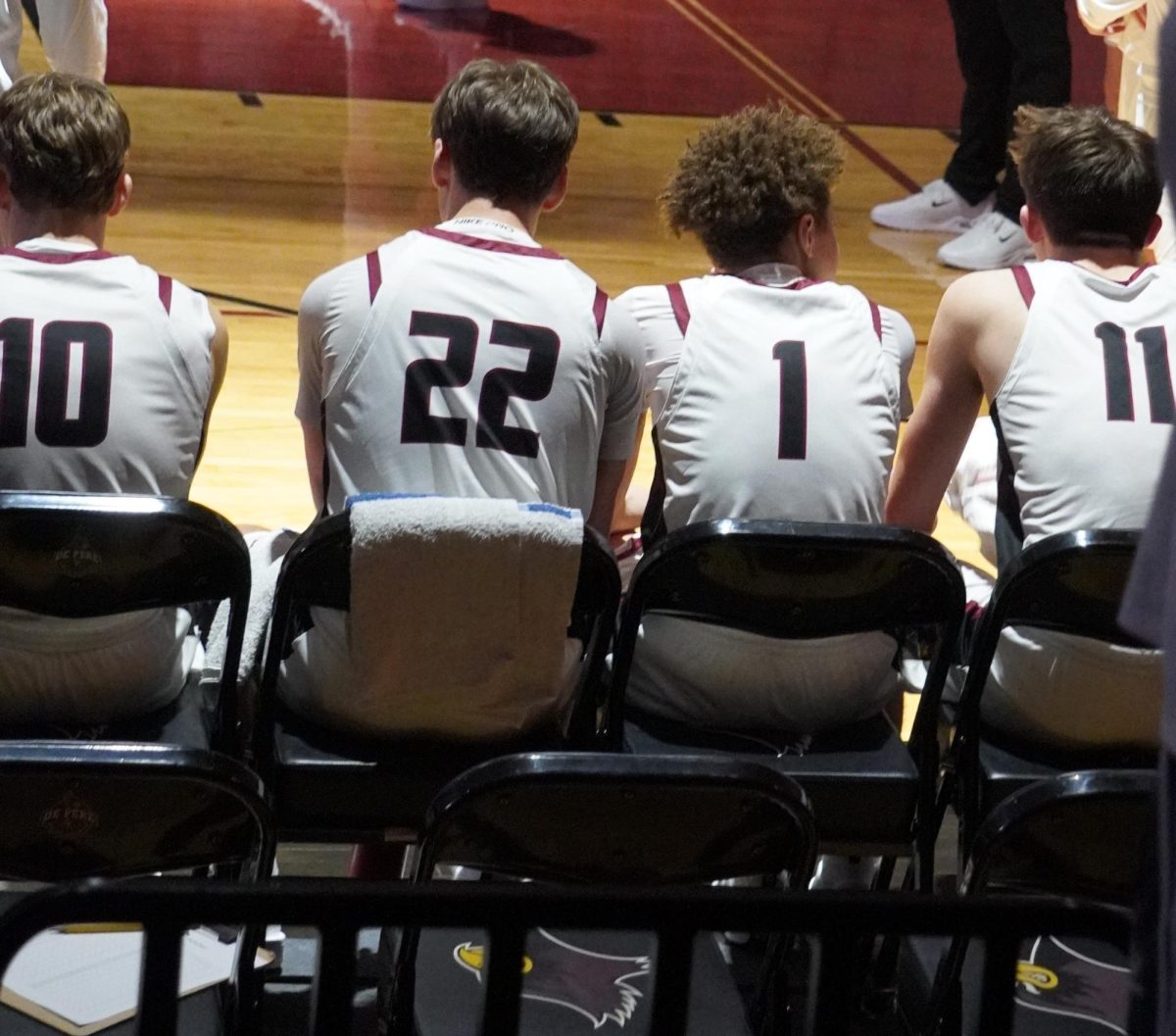






How much are you willing to sacrifice for a sport? Time? Money? Your education? Eight million American students participate in high school sports. That’s 8 million people staring at their future, wondering whether they will have to prioritize academics or athletics.
For me, the answer couldn’t be any more obvious: academics should always take priority. School is a route to higher education, and higher education is a route to success. And it’s not only that. I like to learn. Though it may not be the common sentiment, I like to discover new things, make mistakes, and fix them.
Unfortunately, in a world where children are investments and sports are seen as the end-all-be-all, teens are rarely told to prioritize their education.
To understand this mindset, it is important to examine the main reason for our collective sports craze: fame and money.
In America, nothing is as well-known as sports. Kids grow up with their dad’s football game running in the living room. Because of this, people view athletics as a way to be like their heroes; recognizable by a single name, like LeBron, or hailed as the definitive GOAT, like Tom Brady.
This constant exposure has led to the idolization of our athletes and changed the way that students view their sport. What was once a leisurely pastime has now become a pursuit of fame and glory. Such a mindset causes teenagers to disregard their current education, prioritizing practice over homework and games over tests.
What these students forget, though, is the statistics of fame. That is to say, only the smallest handful of teens will ever go on to be superstars.
Out of 8 million high school athletes, only 7% reach the collegiate level. Out of those 520,000 players, only 12,000 will make it in the pros.
Only 12,000 have a chance at real fame.
The point of these numbers is not to say that success in sports is impossible, but rather to point out that putting possible fame before tangible education is a foolish gamble.
Now, it’s also important to note that not all people value athletics because of ego. As with everything, money has much to do with it. Youth sports have become a multi-billion-dollar industry, and thanks to the NCAA’s allowing NIL deals, more money is involved in sports than ever.
I’ve seen the consequences of this myself, particularly in club volleyball. For context, I play volleyball for One Wisconsin, a club located in Ashwaubenon. While I have many other opinions on their structure, successes, and failures, what has always shocked me are the prices they charge.
To play on their best teams, the Elite level, families must pay $3920. That fee doesn’t even include the travel costs of at least 5 out-of-state tournaments, where parents have to pay for gas, hotels, food, and entry fees at games.
When people invest so much money and time into an endeavor, they want to see a return on investment. So naturally, they push their kids to prioritize sports over school.
This logic is flawed, though, as it believes that sports are only ‘worth it’ if a player can capitalize on their opportunities. But sports offer so much more than that. Participating in athletics builds teamworking skills, critical thinking, and physical fitness.
I’m not saying that sports have no place in our lives; I love playing and watching sports. What I am saying is that the current culture surrounding sports has fundamentally damaged their relationship with education.
So what should we do about this?
We need to remember balance. We need to remember our future, our goals, and our chances. We need to remember that school should come first, and sports should come second.